Scroll
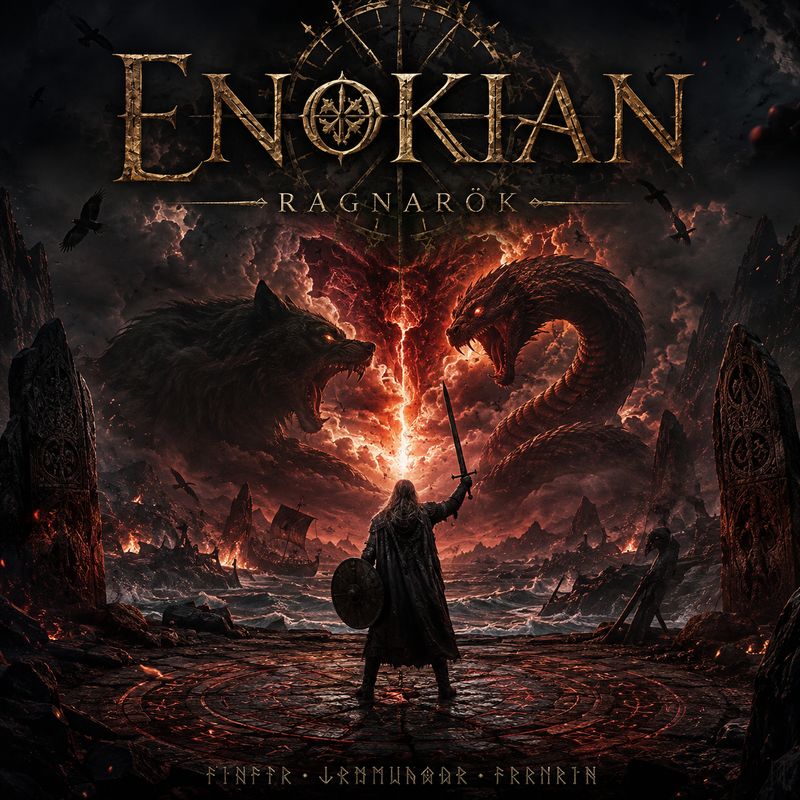
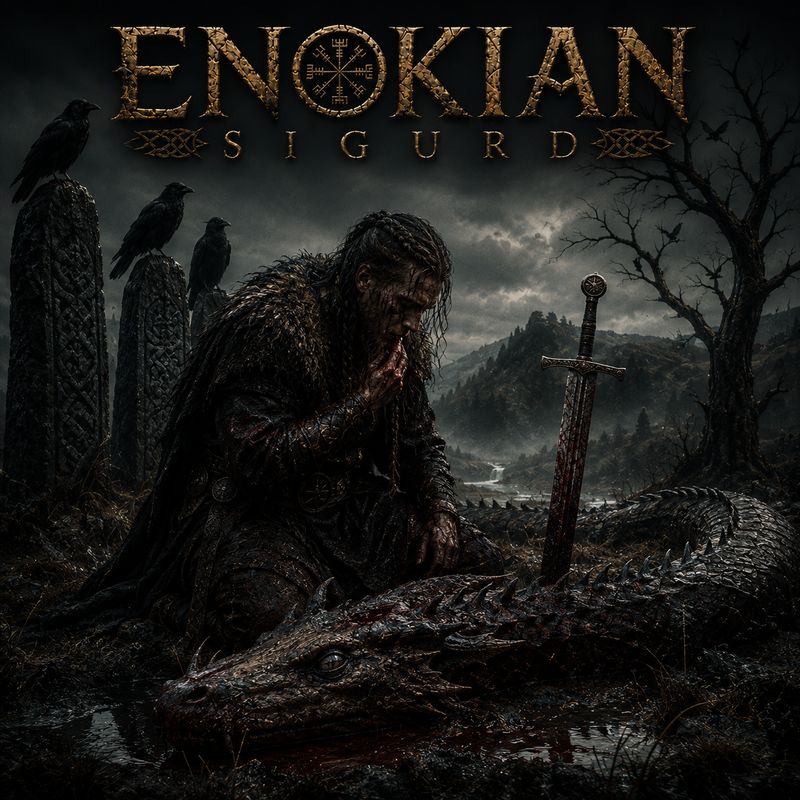
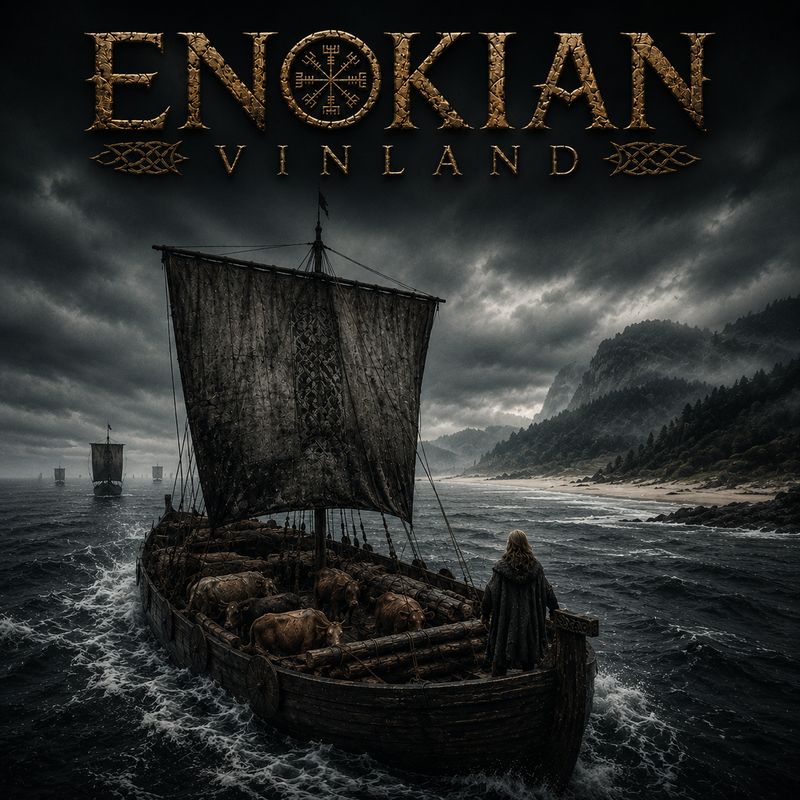
Enokian sets the Norse sources to folk metal: the Poetic Edda, the Völsunga Saga, the Vinland voyages. Not fantasy dressed in fur. The texts are real, the names are attested, and every album carries the sources it was drawn from.
Eleven records tell one continuous story. Fáfnir's gold is Freyja's tears. The bridge in Seiðr describes the wolf and the flooded fields, which is the world of the first album seen a thousand years early. The thread runs through all of it.
Ask me and I will answer. I know it all, and more. Völuspá, str. 28
Eleven records, one story, told in the order the sources tell it.
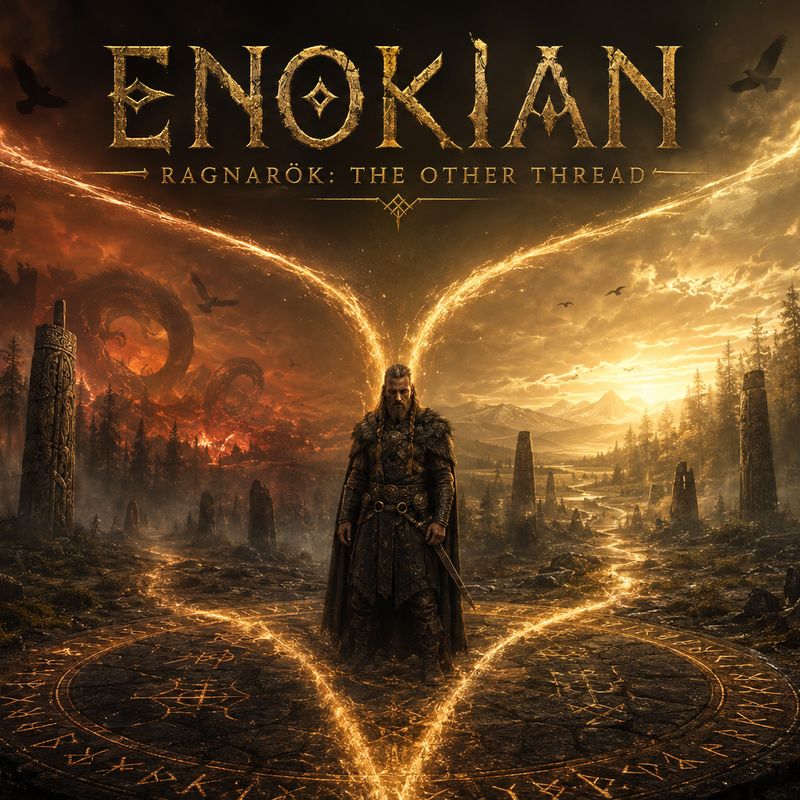
ᛉ the thread splits here
The same ten sets of words, cut a second time. Different melodies, different weight. What the Norns would have woven had their hands moved otherwise.
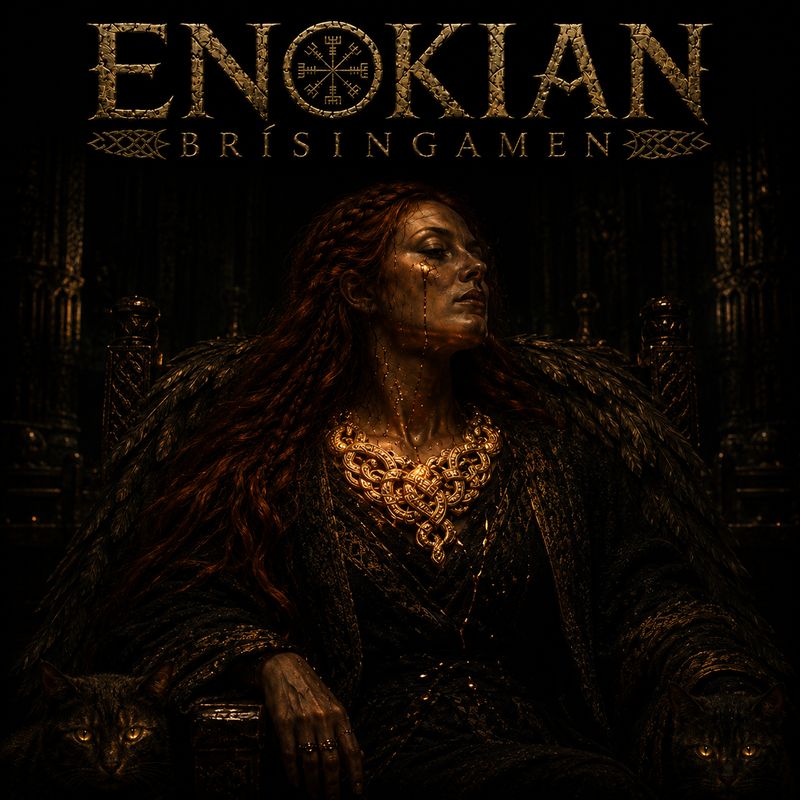
Freyja’s record, carried almost entirely by the female voice. Four nights under the mountain, the falcon cloak, tears of red gold. It surrounds rather than crushes.
Six records finished and waiting on the calendar. Dates announced one at a time.
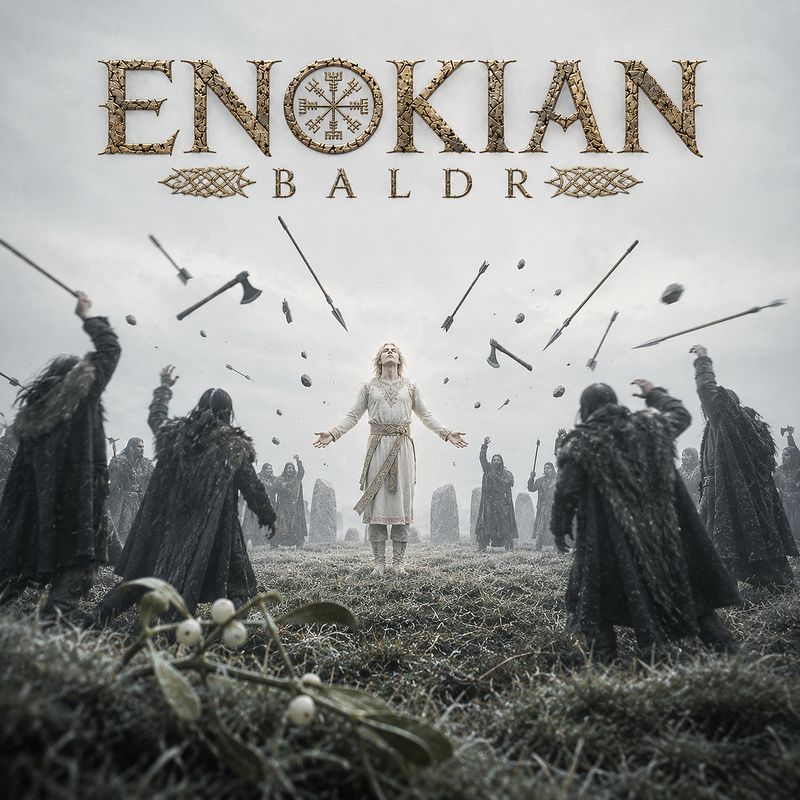
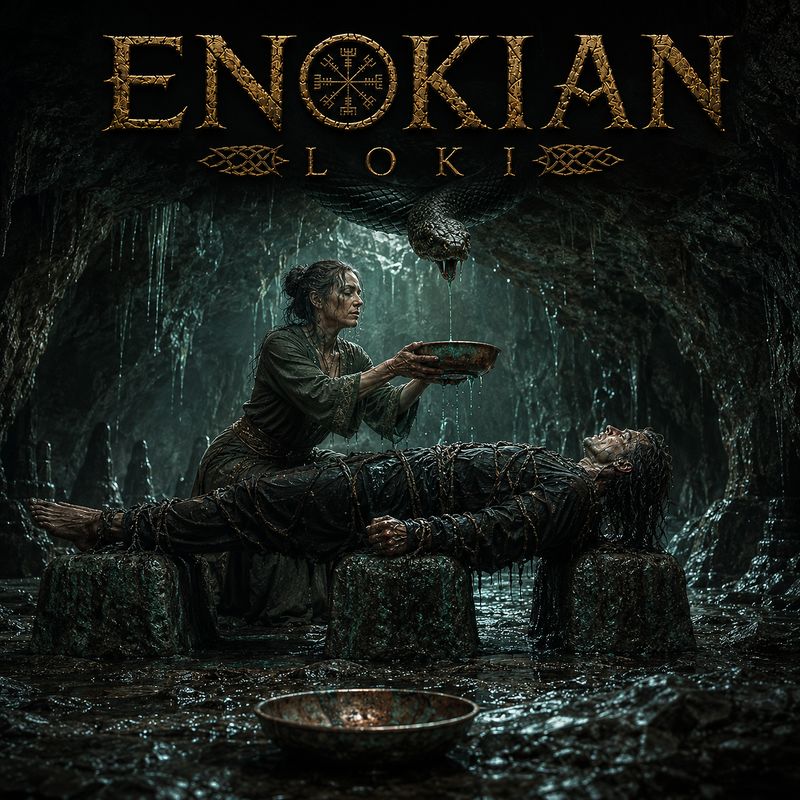
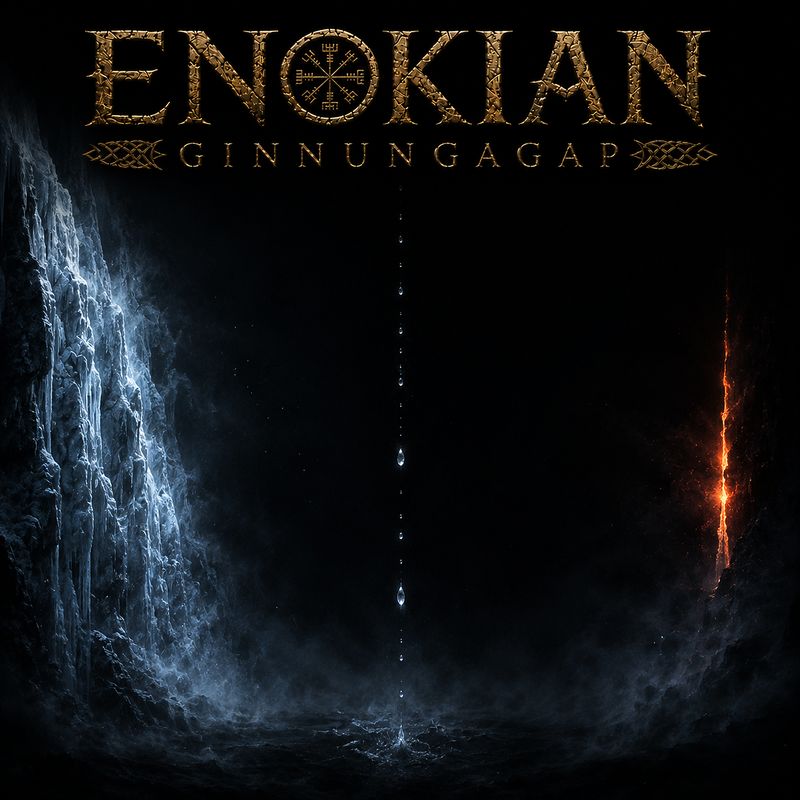
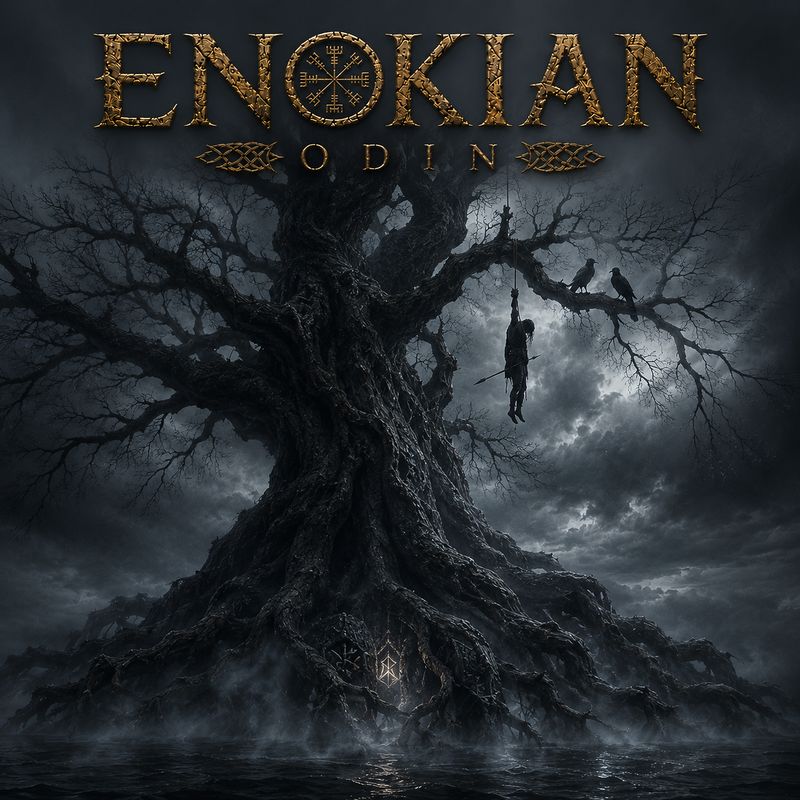
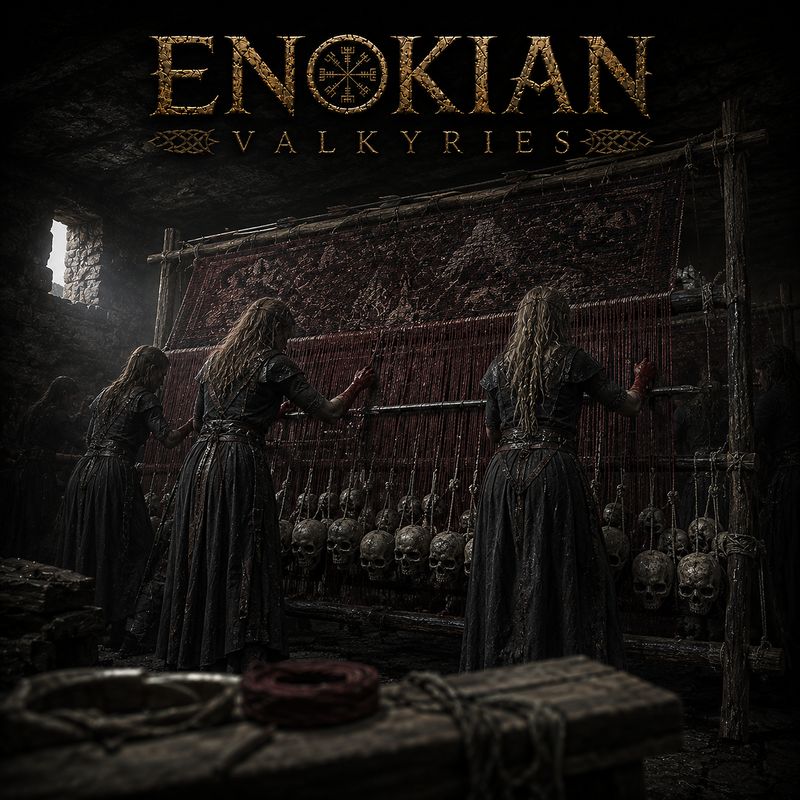
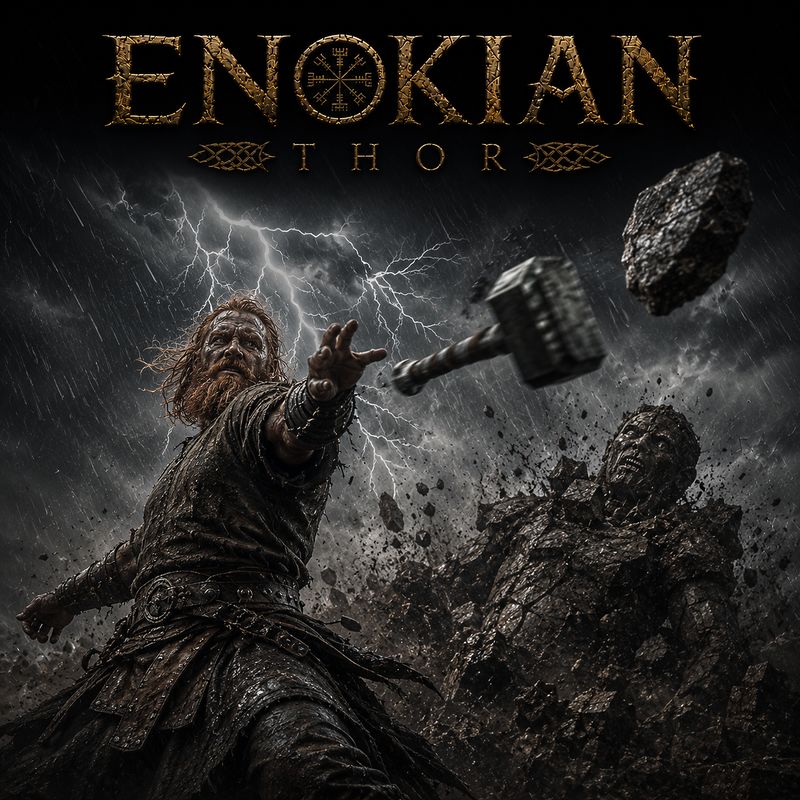
Wide shots, mist, no faces. The camera keeps its distance on purpose. More to come, one at a time.

One book per record: the lyrics, the passages they were drawn from, a note on each track, and the threads running to the other albums. Thirteenth-century Norse with the translation set beside it. No invented runes, no reconstructed language. The sources are named: Grímnismál, Völuspá, Fáfnismál, Eiríks saga rauða.
Deyr fé, deyja frændr,
deyr sjalfr it sama;
ek veit einn at aldri deyr:
dómr um dauðan hvern.
Cattle die, kinsmen die,
you yourself die the same;
I know one thing that never dies:
the judgment on each man dead.
Hávamál, str. 77